What do you do when majority of your energetic grade 4 students who are non-native speakers of English are struggling to understand their History lessons? Granted that the ground realities were such that some students were several years below their grade level in English literacy and others had learning disabilities. Considering this, how can the entire class still achieve the planned learning objectives? The issue wasn’t that the students were uninterested in the lessons. On the contrary, they were super interested in Chhatrapati Shivaji Maharaj, the iconic Indian King on whom the 4th grade textbook is based. Some knew the key moments in his life and could accurately identify historical monuments in and around the city that were associated with the king. But they couldn’t understand the lessons as their level of English didn’t match the level that was required to understand the text.
Though a series of interventions my co-teacher and I, used a combination of theatre based activities and multimedia resources to enable them to understand the various historical details in the life of the Maharaj. While it was often a challenge to get students to keep their decibel levels within the designated acceptable range during the enthusiastic showcase of various scenes. Using theatre and multimedia resources enabled students to recall historical events with greater ease. Towards the end of the academic year, there was a considerable change in students understanding of the course content.
What did we do?
Each lesson plan was structured in a way that included segments on whole class viewing of short video clips in English that was mapped to a portion in textbook, guided reading of the textbook, key scenes enacted by students and class discussions. The lesson spread across several days.
1. Video projection and guided question: The lessons were divided into chunks and corresponding video clips were selected. At strategic points during the viewing, the video was paused and students were asked questions ranging from check-for-understanding to analyze and predict. Typically the questions were:
- Identify the names of the characters you see on screen
- What other information do you know about this characters? Relate any backstory related to the characters?
- Identify characteristics that you would associate with various characters based on their actions.
- What do you think is going to happen next?
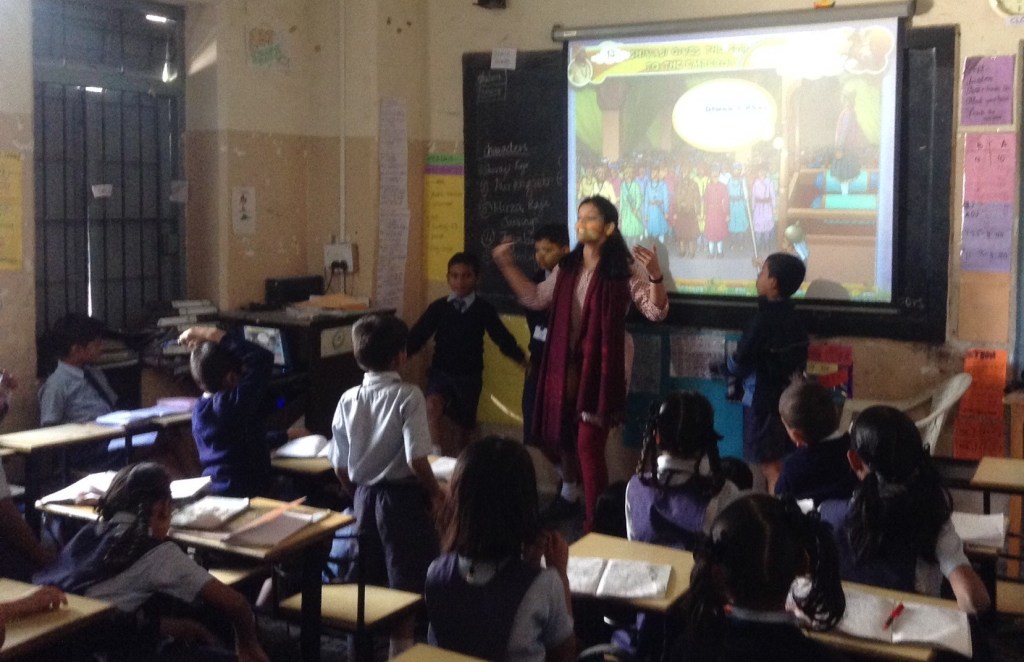
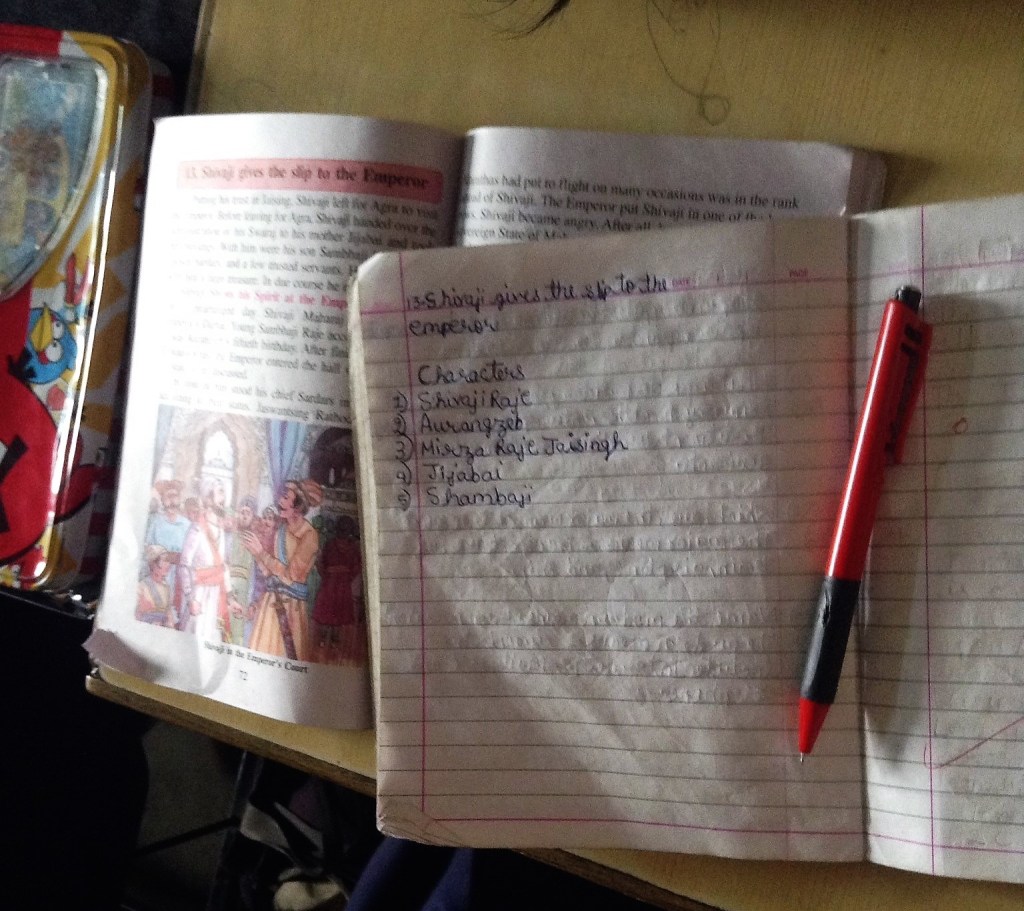
2. Guided reading of a scene from the textbook: After screening of the video and the verbal discussions, we had a whole class reading of the section from the textbook using a range of guided reading strategies. After this, with a partner, students picked out the names of the important characters and underlined the keywords. In certain sections, they numbered the sequence of events. This was followed by a class discussion.
3.Enact the scene: They were divided into groups and they needed to enact a scene. Each team member had to have a role. They could either be the characters, or form part of the décor, or provide dialogues or sound effects to the scene. They were given sometime to prepare in their teams and then they needed to enact the scene, provide sound effects if needed. They could use the local language if needed. After the scene was enacted by each team, peer feedback was provided on how the scene was accurately depicted.
4. Analysis of a scene: After discussions, with a partner, students wrote a short description of the characters and the scene in their own words. In addition, they needed to add why they thought the scene was important in history.
5. Quiz : Students were divided into team and the team with the highest points wins !
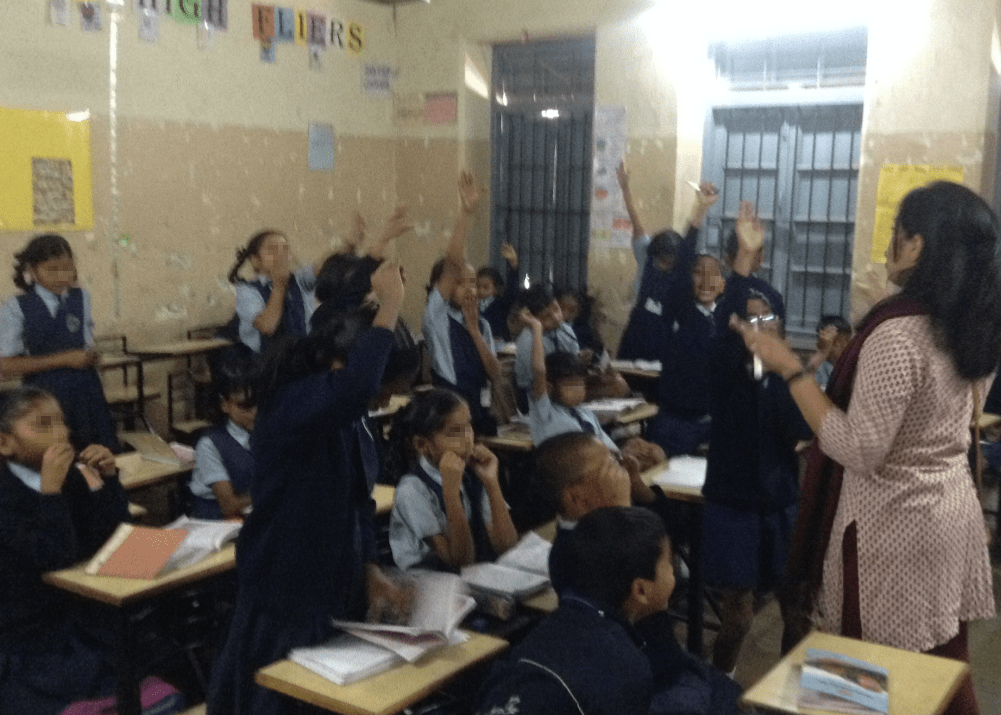
Palpable enthusiasm during the quiz!
 Natasha